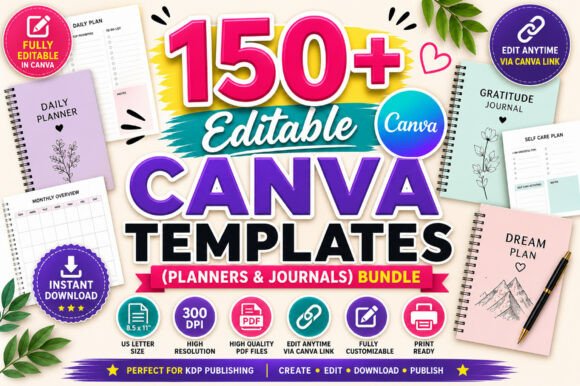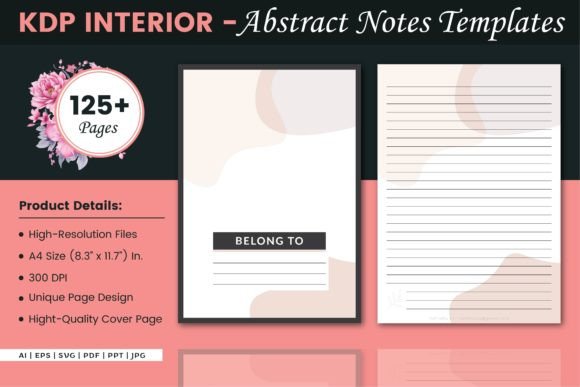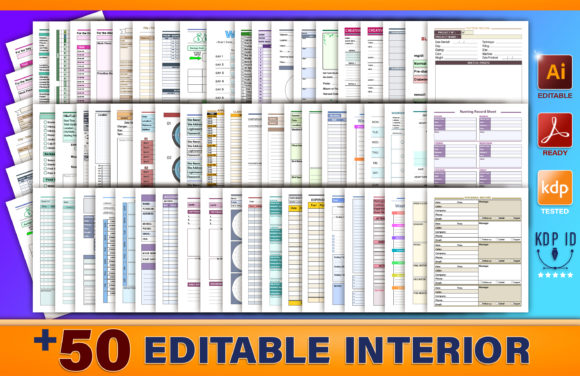
100+ Editable KDP Interiors Templates 2026: Your Publishing Blueprint
Let's be honest. The blank page is intimidating. Staring at a KDP interior template, trying to conjure a professional, market-ready layout from scratch, can stall even the most motivated self-publisher. The gap between a great idea and a polished, publishable product often lies in the design and formatting details. This is precisely where a comprehensive resource like 100+ Editable KDP Interiors Templates 2026 shifts from a convenience to a strategic necessity. It’s not about cutting corners; it’s about starting on a foundation of professional design, allowing you to focus your energy on content and marketing—the true drivers of a book's success.
More Than Templates: A System for Scalable Publishing
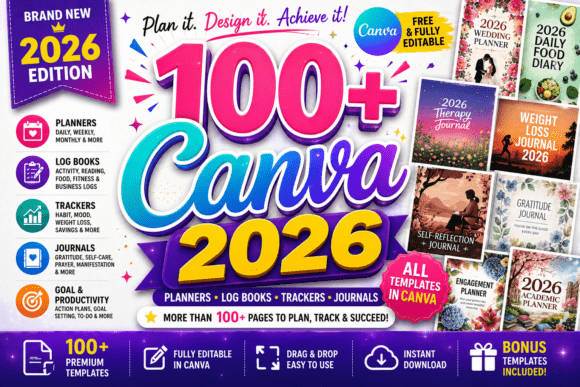
Think of this bundle less as a collection of static files and more as a dynamic design system. The core value isn't just the number—over 100 templates—but the curated, forward-looking specificity. You're not getting generic planners; you're getting a 2026 ADHD Planner for Adults Women, a 2026 Growth Mindset Workbook for Kids, and a 2026 AI Project Planner. Each template is built with a clear audience and purpose in mind, informed by current market trends and search behaviors. The visual personality across the collection leans toward clean, modern typography with intentional whitespace. This isn't cluttered, over-designed filler. It's structured, functional, and aesthetically neutral enough to be a canvas for your brand, but polished enough to convey immediate professionalism on the Amazon marketplace.
The practical applications extend far beyond immediate publishing. Consider the entrepreneur launching a new service. The 2026 Business Budget Planner or 2026 Business Expense Tracker interiors can be branded and sold as digital downloads on Etsy or Gumroad, creating a passive income stream. A wellness coach could bundle the 2026 Healing Journal for Women with the 2026 Therapy Journal into a client starter kit. The 2026 Wedding Planner Journal is a perfect gift for a bridal niche, while the 2026 College Planner and 2026 Study Planner for Students tap into a massive, recurring seasonal market. The templates become versatile design assets in your toolkit, enabling you to test product ideas quickly, build a catalog efficiently, and maintain a consistent brand identity across multiple offerings without hiring a designer for each new project.
Strategic Design for Market Impact
A well-designed interior does more than look good; it functions as a silent salesperson. The layout of a planner influences how a user interacts with it, which directly affects perceived value and reviews. The templates in this 2026 collection demonstrate a keen understanding of visual hierarchy. Sections are logically divided, checkboxes and lines are appropriately sized for writing, and monthly versus weekly spreads are clearly differentiated. This thoughtful editorial design reduces user friction. A customer who finds a planner easy and intuitive to use is far more likely to leave a positive review and become a repeat buyer.
From a branding perspective, consistency is king. Using templates from a single, cohesive bundle allows you to establish a recognizable style across your entire KDP catalog. Whether you're publishing a 2026 Gratitude Journal or a 2026 Social Media Content Planner, the underlying grid systems, margins, and typographic sensibilities can align. This builds subconscious trust with your audience. They learn to associate that clean, professional look with your author name. It’s a subtle but powerful form of brand recognition that elevates your work above the sea of hastily formatted interiors that flood the market.
Practical Implementation: From Template to Best-Seller
Adopting this resource is straightforward, but a strategic approach will maximize your return. First, don't just pick a template based on its title. Evaluate the specific niche and its competition. The 2026 Anxiety Journal is a broad category; the 2026 Anxious Attachment Workbook is a laser-focused sub-niche with potentially less competition and a more dedicated audience. Use the templates as a starting point for research.
Next, make it yours. The editable nature in Canva means you should be customizing. Adjust the color palette to match your author brand. Swap the placeholder text with your unique prompts, instructions, or content. Add your logo or a simple monogram. This transforms a generic 2026 Daily Planner into YourName's Daily Planner, creating a proprietary product. Pay close attention to the font pairing used in the templates. Most will use a combination of a clean sans serif font for body text and a complementary serif font or subtle script font for headings. These pairings are chosen for readability and aesthetic flow—replicate this logic if you decide to change the typefaces. Ensure any new premium font you introduce has a clear commercial license for your intended use.
Finally, think beyond the single book. The true power of having 100+ templates is the ability to build a catalog. Can you create a series? Use the 2026 369 Manifestation Journal as a flagship product, then follow up with a 2026 Self-Love Journal and a 2026 Growth Mindset Workbook for Kids for a different demographic. The templates give you the structural consistency to make this feel like a deliberate, professional series rather than a random collection of books. This approach builds momentum, improves your Amazon author central profile, and opens up opportunities for bundled sales and cross-promotion. In the competitive world of KDP publishing, having a system that lets you produce quality, niche-specific products efficiently isn't just an advantage—it's the foundation of a sustainable business.