Junk Journal Folder Templates: Your Creative Launchpad
There’s a unique satisfaction in holding a handmade junk journal. The layered papers, the unexpected textures, the sense of a story unfolding page by page. But starting from a completely blank page can be paralyzing. This is where a well-designed set of Junk Journal Folder Templates transforms the process from daunting to delightful. Think of these not as rigid blueprints, but as a collection of creative components—your personal design toolkit for building tactile, narrative-driven pieces.
Beyond the Blank Page: A Modular Design System
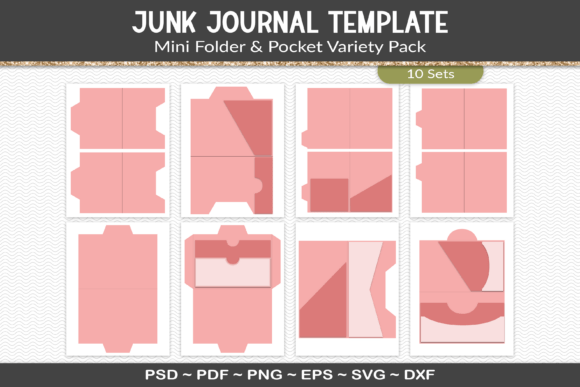
At its core, a quality template set functions like a modular design system for paper crafters. You receive a comprehensive suite of files: editable PSD and SVG files for those who want to dive deep into customization, along with PDF outlines for straightforward printing. The inclusion of PNG stencils is particularly practical, allowing you to incorporate these elements into any design application you’re comfortable with, from professional suites to mobile apps. This multi-format approach respects your existing workflow, whether you’re a seasoned graphic designer using Adobe Illustrator or a hobbyist working with a cutting machine and free software.
The visual personality of these templates often leans into a balanced aesthetic. They provide structure—clean folder pockets, tuck spots, and layered elements—while leaving ample room for your own creative voice. You might find a mix of serif and sans serif inspired shapes in the layout lines, offering a subtle typographic rhythm without imposing a specific font. The style is less about a singular “look” and more about providing versatile design assets. The overall appeal lies in their role as a creative font for your physical projects; they give you the vocabulary to construct your own visual language.
Practical Applications Across Creative Fields
The true value of these templates emerges in their application. For the entrepreneur or small business owner, they are a gateway to creating unique branded packaging, thank-you notes, or product inserts that feel personal and handcrafted. A blogger or content creator can use them to design one-of-a-kind media kits or physical mailers for collaborators, elevating a brand partnership into a memorable experience. The marketer looking to break through digital noise can craft a direct mail piece with a tangible, interactive quality that an email cannot match.
For designers and publishers, these files serve as excellent starting points for editorial design projects or packaging design mockups. The editable vector formats allow for precise scaling and manipulation, ensuring your designs remain crisp from concept to print. In web design and social media graphics, the PNG stencils can be used to create textured backgrounds, decorative frames, or visual accents that add depth and a handcrafted feel to digital layouts. The templates influence visual hierarchy by providing pre-established zones for content, guiding the viewer’s eye in a way that feels organic rather than forced.
A Strategic Approach to Using Your Templates
To get the most from your Junk Journal Folder Templates, approach them with a designer’s mindset. First, evaluate the project fit. Is this for a personal memory-keeping journal or a client-facing brand asset? The intended use will dictate how much you modify the original design. For commercial projects, always double-check the licensing to ensure it covers your planned application.
Next, consider your brand identity or personal aesthetic. If your brand uses a modern, minimalist palette, you might use the folder structures but replace the default textures with your own brand colors and patterns. If your style is more eclectic, mix and match elements from different template sets. The goal is consistency. Use the templates to establish a cohesive look across multiple pieces—like a series of event invitations or a product launch kit—which strengthens brand recognition.
Don’t overlook the power of font pairing when you add text. The neutral nature of the templates means they can support a wide range of typefaces. Pair a clean, modern typography style for headings with a legible body font for details. For a more whimsical project, a handwritten font or script font could complement the tactile feel. Always test your text overlays for readability against the template’s textures and layers. The best premium font choice is one that serves the content, not just the style.
Finally, test and iterate. Print a single proof before committing to a full run. Check how colors translate from screen to paper. See how the folder feels in your hand once assembled. This hands-on review is crucial for catching issues with scale, adhesion, or overall balance that aren’t apparent on a digital preview. By treating these templates as a starting point rather than a finished product, you unlock their full potential as a powerful tool in your creative arsenal, enabling you to produce professional, engaging, and deeply personal work with efficiency and confidence.